

 Emerald (Panna)
 Ruby (Manik)
 Yellow Sapphire (Pukhraj)
 Blue Sapphire (Neelam)
 White Sapphire (Safed Pukhraj)
 Hessonite (Gomed)
 Red Coral (Moonga)
 Pearl (Moti)
 Cats Eye (Lahsuniya)
 Opal (Dudhiya Pathar)
 Red Garnet (Rakt Mani)
 Moonstone (Chandrakant)
 Carnelian (Rat-Ratua)
 Peridot (Mani Stone)
 Green Onyx (Sulemani)
 Jade (Crassula)
 Citrine (Sunela)
 Amethyst (Jamunia)
 Aries (Mesh)
 Taurus (Vrushabh)
 Gemini (Mithun)
 Cancer (Kark)
 Leo (Sinh)
 Virgo (Kanya)
 Libra (Tula)
 Scorpio (Vrishchik)
 Sagittarius (Dhanu)
 January Birthstone
 February Birthstone
 March Birthstone
 April Birthstone
 May Birthstone
 June Birthstone
 July Birthstone
 August Birthstone
 September Birthstone
 October Birthstone
 November Birthstone
 December Birthstone

 Emerald Rings
 Yellow Sapphire Rings
 Blue Sapphire Rings
 Ruby Rings
 Red Coral Rings
 Pearl Ring
 White Sapphire Ring
 Amethyst Ring
 Aquamarine Ring
 Blue Topaz Ring
 Silver Jewellery
 Gold Jewellery
 Panchdhatu Jewellery
 Rose Gold Jewellery
 Platinum Jewellery

With the changing trends and diversification, one thing is crystal clear that Americans have a newer perspective about wealth now. Stocks change every single day, real estate is quite cynical, and inflation is quietly and swiftly eating away all the savings. In this inflated environment more serious investors are looking out for assets that are tangible and hold intrinsic value. This is where the concept of gemstone for investment comes into consideration and conversation.
For most of the US buyers, this gemstone investment is way beyond the aesthetic appeal. It is more of a strategic investment. In terms of portfolio diversification or transfer of generational wealth, gemstones are increasingly becoming and being viewed as compact yet high-value assets. This high-value asset is not only beautiful but also financially meaningful. Let’s have a deep understanding of why this class of asset deserves some serious attention.
The Rising Demand for Gemstones in the United States
Over a few decades investors with high net worths have quietly started collecting the rare colored stones. Auction houses like Sotheby’s and Christie’s have seen record-breaking sales for rubies, emeralds, sapphires, and some rare diamonds. Initially these gemstones were considered collector’s niche but over a period of time it has evolved as a legitimate alternative investment category.
With time even American buyers are becoming more educated and becoming more aware about the fact that rarity drives long-term value. Gemstones are finite assets unlike paper assets. No authority can print more emerald or produce new Burmese rubies overnight. The basic economics of any commodity states when supply is limited, the global demand increases and the prices naturally strengthen over time.

Why Invest in Gemstones Instead of Traditional Assets?
The most common question that arises in the minds of US investors is simple: Why invest in Gemstones when stocks and bonds already exist?
If you also want an answer to this question, then below are three detailed points to it.
Tangible, Portable Wealth
Gemstones are the world’s most compact form of wealth storage available. A good quality sapphire or ruby from a good origin worth six or seven figures can easily sit in the palm of your hand. For this you won’t need any extensive property management or any large storage facilities. When talking in terms of investor’s concern about economic uncertainty, tangible assets always offer more psychological benefits and financial reassurance.
Hedge Against Inflation
History is evidence that luxury tangible assets tend to appreciate when currency weakens. It is true that gemstones are not immune to market cycles, but the high-grade stones show more resilience over long periods. During times of inflation, hard assets often retain their purchasing power better than any cash sitting in your bank account.
Limited Supply and Increasing Global Demand
Some sources of gemstones are either severely limited or exhausted. Burmese rubies from Myanmar, for instance, are becoming more and more scarce on global markets. The same is true with good Colombian emeralds, which are not found in infinite amounts. The rivalry for quality stones is getting more intense as the Middle Eastern and Asian markets become wealthier. This growing demand frequently benefits US consumers who make early investments in certified, natural stones.

The Best Gemstones for Investment in the USA
Gemstones are great investment items, but not all gemstones are investment-grade. Commercial jewelry stones are quite different from collector-quality gems. If you wish to consider gemstones for investment, then focusing on these categories is better; those are as follows:
Ruby
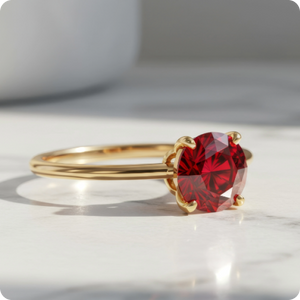
The finest quality ruby having vivid red color commands premium prices. Burmese ruby known for their pigeon’s blood red color, having a slight purple-pink tint are looked for by these auction houses or collector’s as they are rare and have great value to them.
Emerald
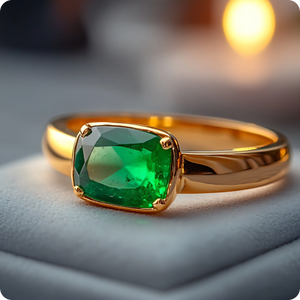
Columbian emeralds have strong color saturation and have minimal treatment tends to have great value in auctions and private sales. The Columban emeralds are natural with great color distribution and no heat or oil-treatment, making them much more valuable.
Emerald Products


Blue Sapphire
Kashmir blue sapphire are the rarest blue sapphires available in the market. Stones of this origin are considered to be the most coveted gemstones globally.
Fancy Colored Diamonds
We often think that white diamonds have dominance in the market, but they are only restricted to retail jewelry. The auction market on the other hand has high value for fancy pink, blue, and yellow diamonds. Fancy colored diamonds are far rarer than the white diamonds.
Understanding Quality: The Key to Smart Investment
It is essential to have correct knowledge before buying any gemstone, hence, understanding the quality factors plays a vital role. Therefore, US investors, before buying a gemstone for investment purposes should pay close attention to these factors mentioned below:
- Color intensity
- Clarity
- Origin
- Carat Weight
- Treatment disclosure
- Certificate from reputable laboratories
There are various independent labs like GIA (Gemological Institute of America) which provide credibility on which the resale value of a stone can be determined. It is very important to select a good gemstone as a poorly chosen gemstone’s worth becomes stagnant in value. A well-selected, untreated, rare stone on the other hand appreciated steadily over time.
Read Also - Gemstones From All Over the World
Regulatory Confidence for US Buyers
The United States is known for its one of the most transparent jewelry markets in the world catering to some of the biggest exhibitions as well. Buyers from this market benefit from:
- Strict disclosure requirements
- Access to certified gemological laboratories
- Legal recourse in case of misrepresentation
These regulations bring more clarity in the minds of the investors along with making the investment safer for them to enter the gemstone market in comparison to the global region.
Liquidity: Addressing the Common Concern
Liquidity is a common critique of gemstones as an investment. They can't be sold immediately at market value, unlike stocks. On the other hand, premium gemstones can be sold by:
- Auction houses
- Private collectors
- Reputable dealers
- International trading networks
Quality and certification have a significant impact on liquidity. It is easier to resell stones that are more sought-after and uncommon.
Portfolio Diversification Strategy
A tiny portion of wealth should be allocated to alternative assets, according to financial gurus. Gems can be used as:
- Protection against the volatility of the stock market
- A safe haven in times of geopolitical unpredictability
- An asset that transfers wealth over generations
When carefully distributed, gemstone prices can lower overall portfolio risk because they are not directly correlated with stock indices.
Read Also - Top 10 Best Gemstones that Suit Your Personality
Long-Term Appreciation Trends
Gemstones of investment quality are not vehicles for short-term speculation. Long-term holding is what makes them strong. Decades of auction data reveal rising prices for rare colored stones, especially untreated specimens with proven provenance. Premium stones have typically maintained and increased in value over long periods of time, despite varying annual yields. A component of the plan is patience.
Emotional and Aesthetic Value
- Gemstones provide personal enjoyment, in contrast to gold bars kept in vaults. They can be worn, incorporated into jewelry, and passed down as heirlooms.
- They are particularly alluring because of their dual advantages of emotional connection and financial potential.
- The potential to combine beauty with wealth preservation gives ownership a new meaning for a lot of American investors.
Tax Consideration in the United States
Under US tax law, gemstones are usually considered collectibles. Upon selling, capital gains tax may be applicable. Before making significant acquisitions, investors should speak with tax experts because regulations can alter and differ depending on the circumstances. For future resale, accurate invoices and documentation are crucial.
Risks You Should Understand
Investments are never risk-free. Among the possible hazards associated with gemstones are:
- Paying too much for retail
- Purchasing synthetic or processed stones without disclosure
- Limited liquidity in the immediate term
- Insufficient knowledge
Working with trustworthy vendors, requesting certification, and carrying out due diligence can all help to reduce these dangers.
Read Also - Do Gemstones Really Work? 7 Shocking Truths
Practical Buying Tips for US Investors
Take these sensible actions if you're serious about investing in gemstones:
- Pay attention to natural, untreated stones.
- Demand official laboratory certification.
- Put rarity ahead of size.
- Refrain from making rash purchases based only on appearance.
- Think long-term rather than short-term.
A quick purchase is not nearly as vital as an informed one.
Why Invest in Gemstones Now?
The current climate is attractive due to a number of macro factors:
- Constraints in global supply
- Growing wealth worldwide
- Growing admiration for colorful stones
- Increasing consciousness among US investors
Early adopters of premium gemstones may find themselves in possession of assets that become more challenging to obtain in the future as more Americans venture outside of traditional marketplaces.
Generational Wealth and Estate Planning
- When it comes to estate planning, gemstones are very appealing. They are simple to divide, move, and pass down through the generations.
- They don't need upkeep like real estate does. They are unrelated to company performance, in contrast to stocks.
- Gemstones are a discreet and long-lasting choice for families looking for portable, long-term wealth preservation solutions.
Comparing Gemstones to Gold and Real Estate
Although gold is commonly known to be a hedge, mining increases its supply every year. Taxes, upkeep, and management are all necessary for real estate. Higher-quality gemstones, however:
- Have a very small supply
- Need little maintenance
- Provide portability
- Maintain your collector’s appeal.
Every item has a purpose, but gemstones offer a unique blend of value density and rarity.
Read Also - 9 Powerful Gemstones in Vedic Astrology You Must Know
The Importance of Authentic Sourcing
American consumers are getting more and more concerned with ethical sourcing. Transparency regarding origin and treatment is offered by ethical sellers. This increases resale value in addition to promoting ethical trading. Modern consumers are better informed, and openness fosters enduring market trust.
Conclusion
In the US, the discourse surrounding alternative investments is changing. Traditional assets are no longer the only options available to serious investors. Investment gemstones provide a unique blend of emotional appeal, mobility, inherent worth, and scarcity. They can act as a legacy asset and a financial safety net if they are appropriately selected and retained for an extended period of time.
The argument is strong for American consumers who place a high importance on diversification, material riches, and long-term planning. Disciplined purchasing, patience, and education are crucial. Purchasing gemstones is not about following trends when done carefully. In a world where genuine rarity increases in value with time, it is about possessing something uncommon.
FAQs
1. Are gemstones for investment better than gold in the long term?
Gold and gemstones have distinct uses. While premium gemstones offer rarity-driven appreciation, gold gives liquidity and pricing transparency. Due to a limited worldwide supply and rising collector demand, investment-grade stones, particularly untreated and verified ones, can beat gold over decades.
2. Why invest in gemstones instead of stocks or mutual funds?
Stocks are volatile and reliant on the market. Gemstones are material possessions that are naturally rare. They are helpful for diversification and long-term asset preservation within a balanced portfolio because they do not move in direct correlation with stock markets.
3. How do I know if a gemstone is truly investment grade?
Seek out untreated, natural stones that are certified to be of a certain provenance and have a vibrant color and clarity. It is crucial to have independent laboratory certification, particularly from respectable gemological institutes. Rare and quite different from mass-market jewelry gems are investment-grade stones.
4. Can gemstones be easily resold in the United States?
Documentation and quality are key factors in liquidity. Certified, premium gemstones can be resold through specialized dealers, individual collectors, or auction houses. Premium stones with a solid provenance draw serious buyers, even though they are not as quick as stocks.
5. What is the minimum budget required to start investing in gemstones?
Investors can start with lesser certified stones in the five-figure range, even though excellent jewels can fetch six-figure prices. Prioritizing rarity and long-term appreciation potential over immediate resale benefits, quality should take precedence over size.
