

 Emerald (Panna)
 Ruby (Manik)
 Yellow Sapphire (Pukhraj)
 Blue Sapphire (Neelam)
 White Sapphire (Safed Pukhraj)
 Hessonite (Gomed)
 Red Coral (Moonga)
 Pearl (Moti)
 Cats Eye (Lahsuniya)
 Opal (Dudhiya Pathar)
 Red Garnet (Rakt Mani)
 Moonstone (Chandrakant)
 Carnelian (Rat-Ratua)
 Peridot (Mani Stone)
 Green Onyx (Sulemani)
 Jade (Crassula)
 Citrine (Sunela)
 Amethyst (Jamunia)
 Aries (Mesh)
 Taurus (Vrushabh)
 Gemini (Mithun)
 Cancer (Kark)
 Leo (Sinh)
 Virgo (Kanya)
 Libra (Tula)
 Scorpio (Vrishchik)
 Sagittarius (Dhanu)
 January Birthstone
 February Birthstone
 March Birthstone
 April Birthstone
 May Birthstone
 June Birthstone
 July Birthstone
 August Birthstone
 September Birthstone
 October Birthstone
 November Birthstone
 December Birthstone
 Emerald Rings
 Yellow Sapphire Rings
 Blue Sapphire Rings
 Ruby Rings
 Red Coral Rings
 Pearl Ring
 White Sapphire Ring
 Amethyst Ring
 Aquamarine Ring
 Blue Topaz Ring
 Silver Jewellery
 Gold Jewellery
 Panchdhatu Jewellery
 Rose Gold Jewellery
 Platinum Jewellery
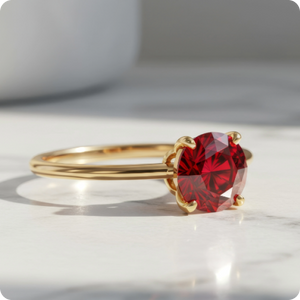

Due to its astrological importance and enticing red tint, rubies, also known as Manik stones in India, are among the most sought-after valuable gemstones. However, one question that both buyers and collectors frequently ask is: Why does the price of ruby vary so much?
Origin, colour, clarity, cut, and treatment are some of the important factors that affect the price of ruby stones, which range from rare specimens costing lakhs to cheaper gems costing only a few thousand rupees per carat. Being aware of these elements enables you to make well-informed decisions and obtain the most return on your investment.
We'll examine the main variables influencing ruby prices in this comprehensive guide, as well as the reasons behind the significant price disparity between India and other countries.
In This Blog:
- Factors Affecting the Cost of Ruby Stone
- Origin of the Ruby Stone
- Colour: The Heart of a Ruby's Value
- Clarity: The Internal Purity of the Stone
- Cut and Shape: Enhancing Brilliance and Value
- Carat Weight: Bigger Stones, Exponential Prices
- Treatments: Natural vs Treated Rubies
- Certification: Authenticity Matters
- Market Demand and Astrological Significance
- Average Ruby Stone Price in India
- Conclusion
- FAQs
Factors Affecting the Cost of Ruby Gemstones
Various factors determines and affect the cost of manik stone; hence, it is essential to understand those factors:
Origin of the Ruby Stone
The provenance of the ruby stone is one of the main variables affecting its price. The quality, clarity, and colour of rubies vary depending on where they are produced. Let's examine the most noteworthy beginnings:
1. Burmese (Myanmar) Ruby - The Most Valuable
The best rubies in the world are thought to come from Myanmar, particularly the Mogok Valley. They have an unrivalled brilliance and a vivid, pigeon-blood red hue. Depending on grade, Burmese rubies can fetch prices ranging from ₹1 lakh to ₹10 lakh per carat due to their rarity and beauty.
2. Mozambique Ruby- High Quality, More Affordable
In recent years, Mozambique rubies have become extremely popular. Though more accessible, they exhibit a deep red hue similar to that of Burmese rubies. Mozambique ruby stones are a popular option for individuals looking for superior quality at a somewhat reduced price, with prices typically ranging from ₹25,000 to ₹1,00,000 per carat in India.
3. Thai Ruby- Deep Red with a Darker Tone
Thai rubies frequently have a redder, more garnet-like hue. Even though they might not be as brilliant as Burmese rubies, jewellery shoppers find them appealing because of their low cost. In India, a carat of Thai ruby stone typically costs between 10,000 and 50,000 rupees.

4. African & Indian Rubies- Budget- Friendly Options
Due to their lower colour intensity and purity, rubies from countries such as Kenya, Tanzania, and India are comparatively less expensive. These are excellent substitutes for individuals who want the astrological advantages of the Manik stone without going over budget. Each carat might cost anything between ₹2,000 and ₹15,000.
Colour: The Heart of a Ruby's Value
The primary factor affecting the price of rubies is their colour. A vivid pure red, with slight blue undertones, sometimes referred to as "pigeon blood red" is the ideal ruby color.
Key Colour Attributes Affecting Ruby Price:
- Hue: The ruby's primary colour (pure red as opposed to orangish-red or purplish red).
- Tone: Medium to medium-dark hues are said to have the best colour depth.
- Saturation: The intensity or vibrancy of the red color.
Overly bright or dark-coloured rubies are typically less costly. For example, even if other quality factors are comparable, a bright, saturated red ruby may cost up to ten times as much as a pale or very dark one.
As a result, while determining the price of Manik stone, gemologists frequently start by examining colour.
Clarity: The Internal Purity of the Stone
Rubies have intrinsic defects or natural inclusions, just like other gemstones. The formation of the gemstone under intense heat and pressure led to these inclusions.
- Very rare and valuable are high-clarity rubies, or those with little obvious inclusions.
- The majority of purchasers can afford common rubies.
- Heavily included rubies are significantly less expensive, particularly those with obvious fissures or dark areas.
Because entirely inclusion-free rubies are practically nonexistent, a ruby with dazzling clarity and few inclusions will typically fetch a higher price.
While a similar ruby with mild inclusions may cost between ₹50,000 and ₹1 lakh per carat, an excellently clear Burmese ruby might cost over ₹2 lakh.
Read Also - Benefits of Ruby (Manik) Stone
Cut and Shape: Enhancing Brilliance and Value
The shape of a ruby can directly impact the overall quality, brilliance, and beauty. Cutters work to ensure the highest possible carat weight while also enhancing the gemstone's beauty, since rubies are a natural rarity and expensive.
Typical Ruby Cuts:
- Oval Cut: The most common cut for jewellery, it enhances brilliance.
- Cushion Cut: A traditional shape that keeps colour vibrancy.
- Round Cut: Beautiful to look at, but less common because of considerable waste.
- Cabochon Cut: For asterism-displaying star rubies.
A well-cut ruby can look more vibrant and lively, increasing its value. Even rubies with outstanding colour can appear lacklustre due to poor cutting, which lowers their market value.
For example, depending on how beautifully the gemstone is cut and polished, the price of a ruby stone in India can rise by 20% to 30%.
Carat Weight: Bigger Stones, Exponential Prices
The cost of a ruby per carat rises disproportionately with size, as is the case with all gemstones. Particularly when they retain exceptional colour and purity, large rubies (over 2–3 carats) are much more uncommon than smaller ones.
For instance:
- Each carat of a quality Burmese ruby might cost ₹1 lakh.
- A 3-carat size of the same grade may cost between ₹3 and ₹5 lakh per carat.
The scarcity of larger rubies with the same superior qualities is the cause of this exponential price increase.
Read Also - Top 10 Things You Must Check Before Buying a Ruby Stone
Treatments: Natural vs Treated Rubies
Another major factor influencing the cost of ruby stone is whether it's treated or natural (untreated).
1. Heat-Treated Rubies
To improve colour and clarity, most rubies sold on the market undergo heat treatment. The technique enhances their visual appeal even if these are real rubies. Depending on quality, heat-treated rubies can cost anywhere from ₹10,000 to ₹1 lakh per carat, making them reasonably priced.
2. Unheated Natural Rubies
Because they are so uncommon, unheated rubies are highly valued in the gemstone industry. Both astrologers and collectors value these stones highly. Top-quality rubies from Burma or Mozambique can cost anywhere from ₹2 lakh to ₹10 lakh per carat in India.
3. Glass-Filled or Composite Rubies
Lead-glass filling is used to enhance the colour and transparency of certain rubies. Despite their aesthetic attractiveness, these stones are much less valuable and less resilient. They are not advised for astrological reasons and often cost less than ₹5,000 per carat.
Certification: Authenticity Matters
Artificial materials are prevalent on the market for gems. A ruby certified by a reliable gemological lab ensures authenticity and supports the price.
Credentials from reliable laboratories such as GIA, IGI, or GRS provide evidence of details such as:
- Origin: natural or artificial.
- Status of treatment.
- Clarity, cut, and carat weight.
Investing in a certified ruby protects your money and gives you insight into the going rate for your gem in India.
Market Demand and Astrological Significance
Particularly in India, the astrological need for rubies has a significant impact on the price of their jewelry. In India, the Manik stone, linked to that of the Sun (Surya) and is believed to bring its holder wealth, fame as well as leadership.
The price of Manik stone tends to increase at favourable times, such as wedding seasons or solar transits, due to increased demand. In a similar vein, a supply shortage from Mozambique or Myanmar may likewise raise prices in the Indian market.
Average Ruby Stone Price in India
Here is a list of the average ruby stone price in India according to their origin:
Burmese Ruby: Top Quality (₹1,00,000 – ₹10,00,000+)
Mozambique Ruby: Premium Grade (₹25,000 – ₹1,00,000)
Thai Ruby: Medium Quality (₹10,000 – ₹50,000)
African/ Indian Ruby: Commercial Quality (₹2,000 – ₹15,000)
Glass Filled Ruby: Low Quality (₹500 – ₹5,000)

Conclusion
Several natural, aesthetic, and commercial elements influence the price of ruby stones; carat weight, cut, colour, clarity, provenance, and treatment are all important considerations. By being aware of these subtleties, buyers in India can be sure they are paying a reasonable price for genuine, high-quality rubies.
When you're buying ruby stones online, make sure you work with a reliable platform like GemsRoot, which offers lab-certified gemstones, worldwide shipping, and transparent, unmatched pricing. You'll get all the varieties at a reasonable price with proper guidance and quality assurance. You can contact us at +91 114-314-8316. We also offer gemstone recommendation to understand better what to wear and how to purchase the stone. Contact us to know more!
FAQs
1. Why does the cost of ruby stone vary so much?
The origin, colour intensity, clarity, carat weight, and treatment all affect the price of a ruby. Compared to treated or inferior rubies, premium Burmese or unheated rubies are substantially more expensive.
2. What is the average cost of a ruby stone in India?
The price varies based on clarity, colour and quality. Ruby stones from India range from Rs 2,000 for commercial-grade rubies to Rs 10 lakh for top-quality Burmese rubies.
3. How is the cost of Manik stone calculated?
Manik stone's carat weight, natural origin, treatment status, and colour richness are all considered when determining its price. Vibrant red rubies with outstanding clarity that aren't heated get the greatest prices on the market.
4. Why are Burmese rubies more expensive than other rubies?
Famous for its extraordinary clarity and striking pigeon-blood red color, Burmese rubies are extremely scarce. They are one of those with the highest value around the globe and are highly prized in India because of their rarity and the quality.
5. How can I identify if a ruby is worth its price?
Verify the gemstone's certification, origin, colour consistency and other treatment information to ensure the fair price of ruby stones in India. Be sure to buy from reliable sellers that offer authenticity reports from trustworthy gem labs.
