

 Emerald (Panna)
 Ruby (Manik)
 Yellow Sapphire (Pukhraj)
 Blue Sapphire (Neelam)
 White Sapphire (Safed Pukhraj)
 Hessonite (Gomed)
 Red Coral (Moonga)
 Pearl (Moti)
 Cats Eye (Lahsuniya)
 Opal (Dudhiya Pathar)
 Red Garnet (Rakt Mani)
 Moonstone (Chandrakant)
 Carnelian (Rat-Ratua)
 Peridot (Mani Stone)
 Green Onyx (Sulemani)
 Jade (Crassula)
 Citrine (Sunela)
 Amethyst (Jamunia)
 Aries (Mesh)
 Taurus (Vrushabh)
 Gemini (Mithun)
 Cancer (Kark)
 Leo (Sinh)
 Virgo (Kanya)
 Libra (Tula)
 Scorpio (Vrishchik)
 Sagittarius (Dhanu)
 January Birthstone
 February Birthstone
 March Birthstone
 April Birthstone
 May Birthstone
 June Birthstone
 July Birthstone
 August Birthstone
 September Birthstone
 October Birthstone
 November Birthstone
 December Birthstone
 Emerald Rings
 Yellow Sapphire Rings
 Blue Sapphire Rings
 Ruby Rings
 Red Coral Rings
 Pearl Ring
 White Sapphire Ring
 Amethyst Ring
 Aquamarine Ring
 Blue Topaz Ring
 Silver Jewellery
 Gold Jewellery
 Panchdhatu Jewellery
 Rose Gold Jewellery
 Platinum Jewellery


History of Ruby Stone

Did You Know?
The largest ruby, named Estrela de Fura, is the most expensive ruby ever sold at an auction for a record-breaking 34.8 million. The 55.22-carat ruby is described as one of the largest, most valuable, and exceedingly rare gems.
The Properties of Ruby Stones
Different Types of Ruby Stone Based on Origin
The origin of Rubies plays a significant role in measuring their value. Even though they are mined worldwide, certain mining locations have more worth. For example, as per market standards, Burmese Rubies are of the finest quality. So, here are the top 8 types of ruby gemstones based on their origins.
Burmese Ruby: Myanmar, formerly known as Burma, produces the finest quality rubies. The Burmese rubies are famous for their beauty, rarity, and durability. But the most striking factor is their pigeon's blood-red color. The Burma rubies are deemed to be of higher quality because they display a more appealing and richer red. A ruby from Burma will cost more than any other mining location.

Mozambique Ruby: Mozambique rubies come after Burmese rubies in terms of international market demand. They make up a significant part of the rubies coming from Africa. They come in a wide range of colors, including orangish, purplish, and reddish hues. Some gems from here even reach the "pigeon blood red" benchmark. They are famous for their brilliant color, strong fluorescence, and intense saturation.

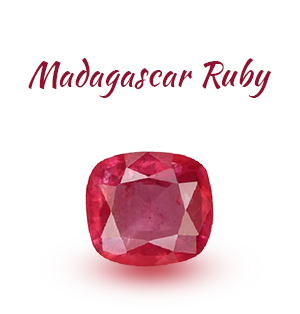
Madagascar Ruby: Madagascar ruby mines are emerging as the next best location for quality rubies after Mozambique. The geological formation of Madagascar Manik stones is interesting as it forms like a metamorphic rock. They are low in iron and high in fluorescence. The rubies have a dark and clear appearance, but they are heat-treated a lot. Irrespective of this, the location can produce the finest quality untreated rubies.
New Burmese Ruby: New Burmese ruby is the new trade name for Thai rubies. Thailand rubies display a brilliant "royal red" shade. They often exhibit a higher purplish tint because of high iron and low fluorescence content. They also have a deeper tone compared to Burmese stones due to the absence of silk. The silk is what beautifully scatters light in gems. But they do exhibit amazing clarity.
Read Also - Top 10 Astrological Benefits of Ruby (Manik) Stone

African Ruby: African rubies come in purplish to dark red shades. They can be opaque, translucent, or transparent. The market standards consider fine dark as a high-quality African ruby color. These stones are usually cut, faceted, and untreated. Treatments for them are not suitable; however, it depends a lot on the origin. When buying, one should be aware of any treatments and ask for relevant certificates.

Indian Ruby: Many high-quality types of Manik stone include Indian Rubies. They usually have a pinkish-red look and are more opaque than translucent. They come in round, carved, or cabochon shapes. India-origin rubies are also one of the most affordable options available. As per Vedic astrology, they are highly auspicious gems with mystical transforming and healing powers.

Tanzania Ruby: Tanzanian ruby comes from Songea town in Tanzania. They are also known as Songea rubies. Some Tanzanian-origin gems are far rarer than diamonds. They display a bright red hue with medium saturation and tone. These look their best under natural lighting. They are high in iron content and lack fluorescence. They also have high magnesium levels, resulting in a wide color range.

Mogok Ruby: Finally, we have Mogok rubies that come from the Mogok Valley. They display vivid saturated red with slight hints of purple. They have enough translucency to allow light to bounce around inside and produce an enchanting color. These also have microscopic silk inclusions that scatter and diffuse light, giving a velvety look. They are also one of a kind, that's at par with pigeon blood rubies.

Read Also - 9 Useful Tips To Know Before Buying A Ruby Stone
Different Types of Ruby Stone Based on Color
Ruby's color is another significant factor affecting its market value. The finest quality rubies display a vibrant and pure to a slightly purplish red shade. Stones with a pure red hue command the highest price in the market. Whereas gems with orange or purple undertones have less market worth. An ideal ruby gemstone must display a color that's neither too dark nor too light.
Here are different types of ruby crystals based on color.
Pigeon Blood Ruby: As per industry standards, pigeon blood rubies are the finest quality rubies worldwide. It refers to a rich and deep red color. Myanmar, formerly known as Burma, is a major producer of this top shade. The pigeon blood red might be the benchmark, but it's all about personal preferences. If you are considering buying this gem, ensure the company has all the necessary certifications.

Pinkish-Red Ruby: Pinkish-red rubies have a slight pink undertone while red is the dominant hue. The moment pink tones overpower the red, it becomes a pink sapphire. The debate over parameters to segregate pinkish-red rubies and pink sapphires is subjective. Different gemologists have varying parameters. It gives sellers the freedom to label and price their products according to market demands.

Purplish Red Ruby: Purplish red rubies have a slight tint of purple in them. Some purple hints are desirable and command a high market value. They must have soft, glowy, and red fluorescence. Finest quality stones with this color are rare finds. But they are available in a wide range of sizes and shapes.


Lucky Benefits of Ruby Gemstone
- Wearing rubies can help rekindle love, passion, and romance in relationships.
- It can enhance strength, energy, and vitality.
- It boosts innovation, creativity, and analytical skills.
- It is well-known to open and balance the root chakra.
- It helps attract good health, success, and prosperity.
- Chunni stone is also known as the "stone of protection", so wearing it can remove negative energies.
- Additionally, it can improve blood circulation, strengthen the heart, and reduce anemia.
Not to Confuse Between Star Ruby & Red Spinel
Where to Buy Ruby Stone Online?
Ruby has a wide variety depending on its origin and color. But now that you know the different types of ruby crystals, making an informed decision is easier. So, if the ruby stone attracts you, explore our premium range of natural rubies online at GemsRoot! We deal in 100% authentic, ethical, conflict-free, and lab-certified stones at the best prices. Contact our
FAQs
What is the history of the Ruby gemstone?
The name Ruby comes from the Latin word "ruber," meaning red. Rubies were first discovered in India over 2000 years ago and were revered as the "king of gems" or "Ratnaraj." They were traded across Asia and valued by royals and warriors as a symbol of protection, power, and vitality.
What are the main properties of Ruby stone?
Ruby belongs to the Corundum mineral family and has a hardness of 9 on the Mohs scale, making it the second hardest gemstone after Diamond. Its red color comes from Chromium, and the intensity of red depends on its concentration. Rubies symbolize love, passion, strength, and protection.
Which zodiac signs should wear the Ruby stone?
According to Vedic astrology, Ruby is associated with the Sun and is especially recommended for Leo (Singh Rashi) natives. However, people with weak Sun placement in their horoscope can also benefit from wearing Ruby after proper consultation with an astrologer.
Where can I buy natural Ruby stones online?
You can buy 100% natural, ethical, and lab-certified Ruby stones online from GemsRoot. We offer premium Burmese, Mozambique, African, and other origin Rubies at the best prices with secure packaging and expert guidance.


